Decades later, Adriano Olivetti’s vision continues to question the present with striking relevance.
At a time when the factory was conceived primarily as a place of production, Olivetti imagined the company as a community: a space in which work, culture, architecture, art, and education all contributed to the growth of the individual, the local area, and the company itself.
Today, as businesses and institutions face increasingly complex challenges, that intuition appears more central than ever. Workplaces are no longer merely functional spaces, but ecosystems of skills and relationships, where innovation and knowledge emerge from the encounter between different disciplines: design, art, technology, cinema, theatre.
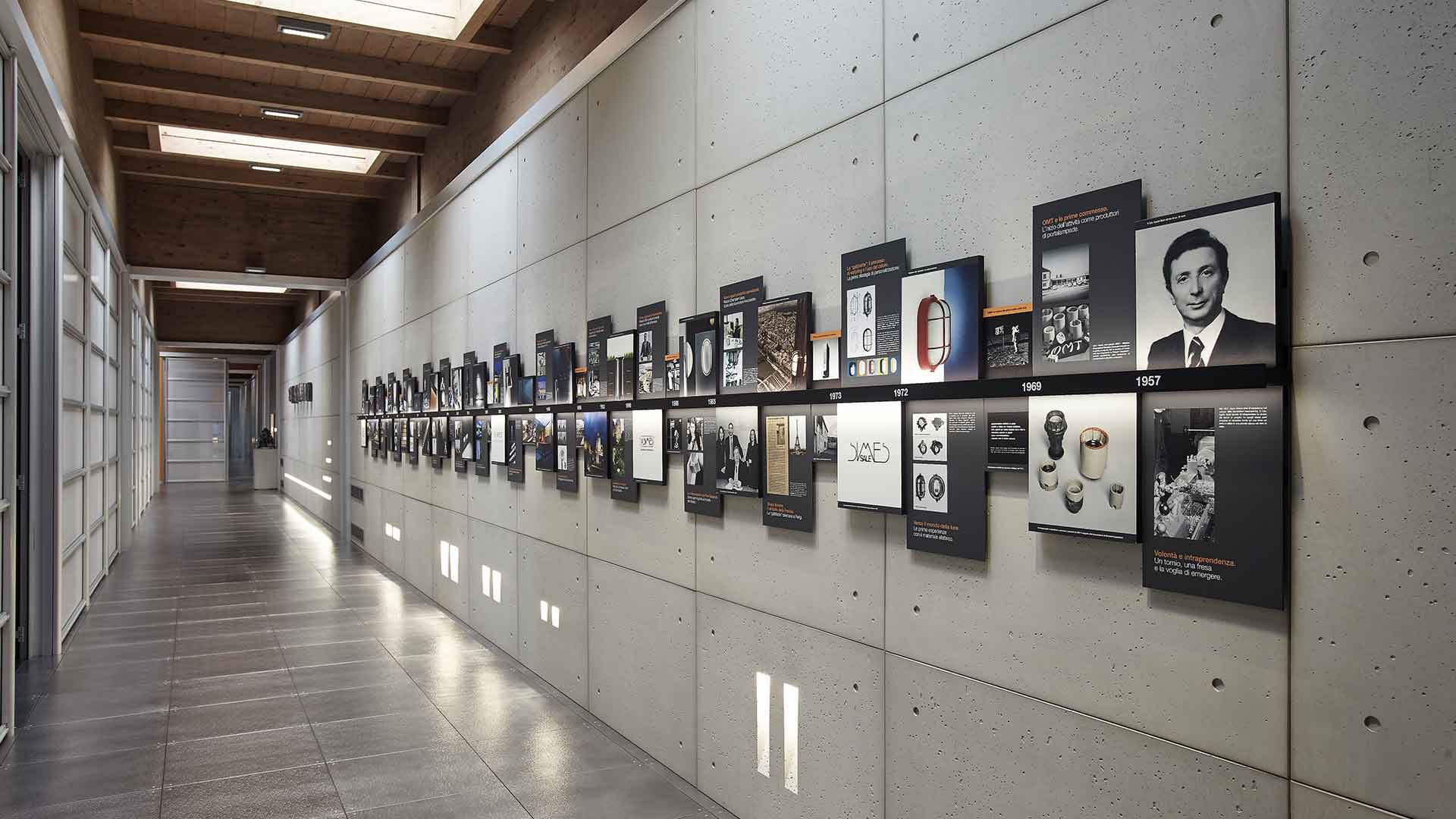
Simes Headquarter
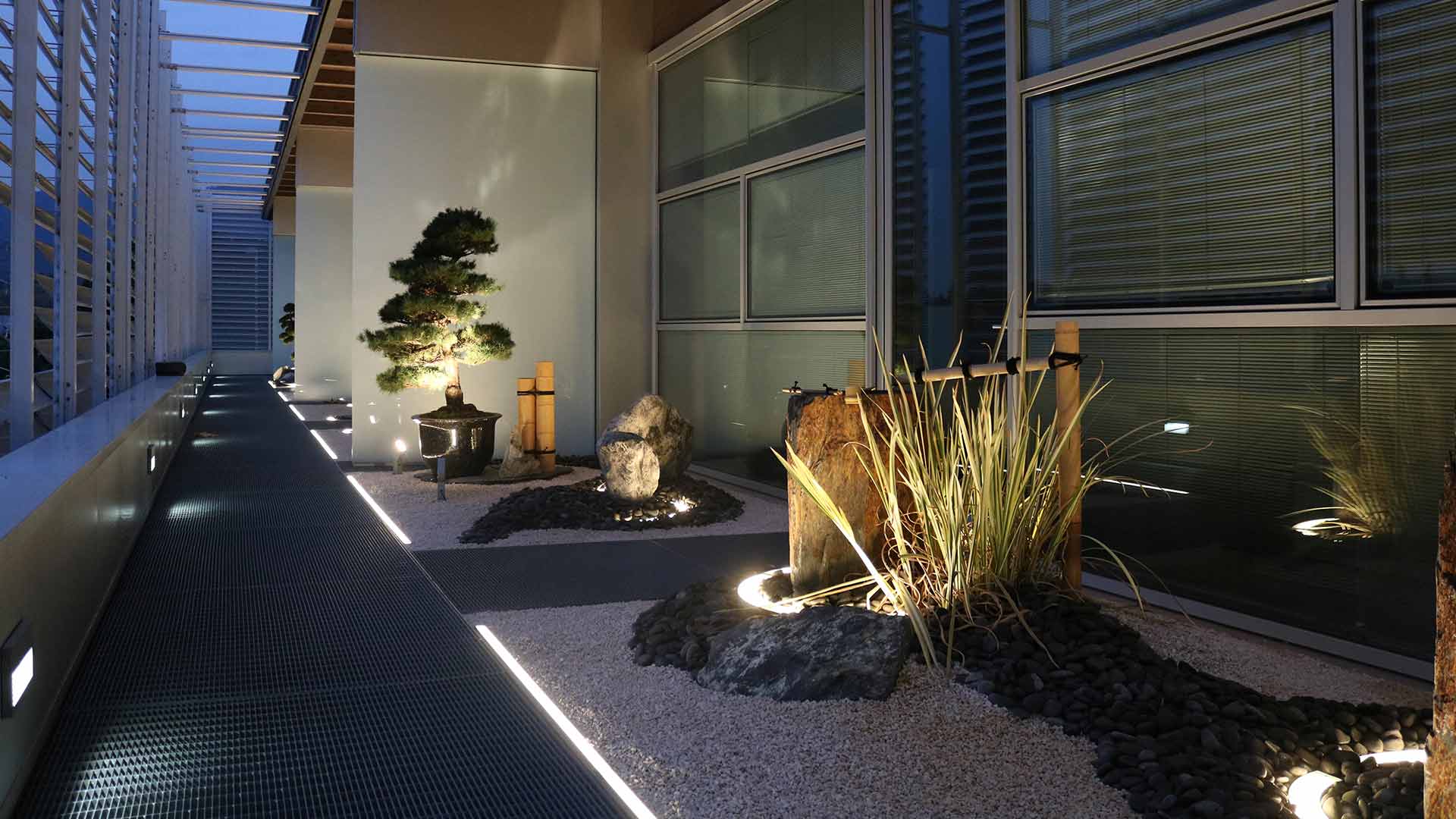
In this context, culture is not an accessory value, but a true infrastructure of thought. And art, with its ability to generate questions, offer beauty, broaden our perspective, and stimulate curiosity, becomes an essential language for inspiring people.
It is from this perspective that the dialogue between art, light, and space is born.
A work of art changes the way we look at a place.
Sometimes a single unexpected presence is enough: a sculpture in a garden, a figure inhabiting a courtyard, a surface that at sunset reveals details that were previously invisible. Art does not simply add beauty to a space: it changes its rhythm, invites us to pause, and opens a new relationship between the viewer and their surroundings.
When it enters into dialogue with light, this relationship is transformed once again. Materials gain depth, shadows become part of the narrative, and volumes emerge with new intensity. It is in this encounter between artwork, architecture, and perception that space ceases to be just a container and becomes an experience.
In SIMES environments, art is part of this daily experience. Not as a decorative element, but as a living presence: something that accompanies those who work, welcomes those who visit, and suggests, every day, a different way of reading the space.
Art as an everyday presence
Bringing art into workplaces means changing perspective.
It is not only about making an environment more beautiful, but about recognizing that productive, design, and professional spaces can also generate culture. A work placed in a location that people pass through every day is not observed just once: it changes with the light, with the seasons, with the point of view of those who encounter it.
It is a presence that does not impose a single interpretation. On the contrary, it opens up questions.
A sculpture can interrupt a habitual path, turn a break into a moment of observation, make an architectural detail visible that previously went unnoticed. In this sense, art becomes a silent yet constant language, capable of connecting people, places, and different sensitivities.
Light as the second voice of the artwork
Light does not merely make a work visible. It interprets it.
By day, a sculpture lives in relation to the sun, the landscape, and the architecture that surrounds it. By night, it is artificial light that guides the gaze. It can reveal a fold, accentuate a surface, lighten a volume, draw a shadow.
Each material reacts in a different way.
Bronze absorbs and returns warmth. Terracotta preserves a more intimate and physical dimension. Reflective surfaces multiply glows and reflections. Iron, wood, lead, or corten steel express their nature through engravings, oxidation, marks, and irregularities.
In this dialogue, light must not overpower the work. It must listen to it. It must allow what already exists to emerge, accompanying the form without turning it into a spectacle.
Matter, body, memory: artists and their worlds
The works displayed in SIMES spaces express very different lines of research. Each one carries a specific way of understanding form, material, and the relationship with space.
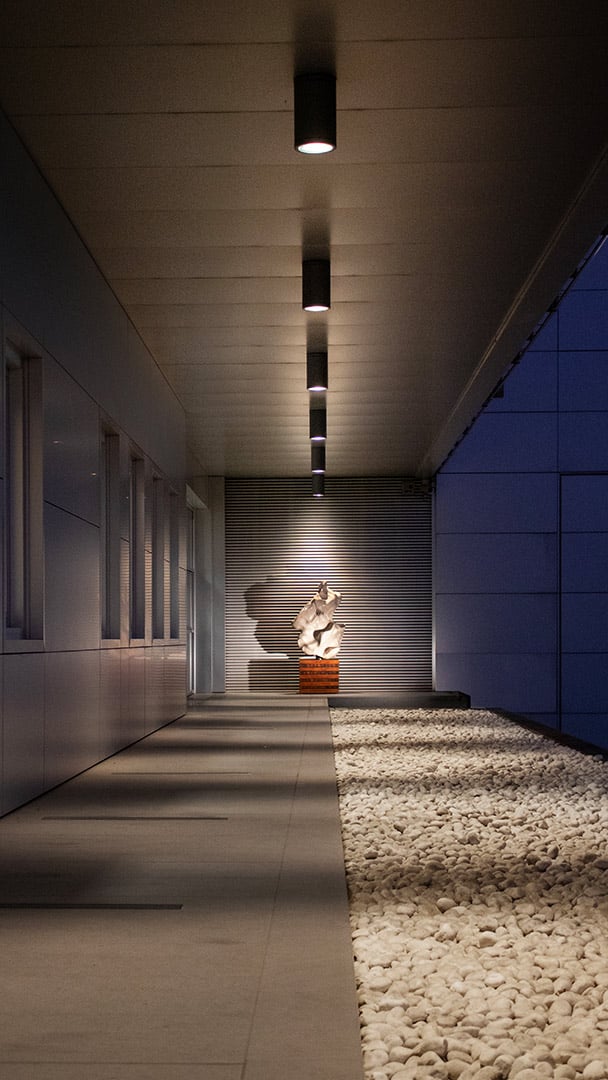
With Giampietro Abeni, known as Gineba, sculpture takes on a more intimate and symbolic dimension. In the work housed in the SIMES spaces, the gesture of an embrace becomes form, tension, and relationship: a presence suspended between intimacy and monumentality, which the light from above shapes in its solids and voids, emphasising the dialogue between body, shadow, and architecture.
With Franca Ghitti, material becomes memory. Wood, iron, engravings, and reclaimed surfaces preserve traces, layers, and references to Camunian tradition. Here light enters the marks, reveals their depth, and gives voice back to what is incised, carved, and sedimented.
In the works of Stefano Bombardieri, sculpture introduces a suspended, ironic, and theatrical dimension. Animals, often out of scale or placed in unexpected situations, call into question our perception of weight, balance, and space. Light amplifies this tension, projecting shadows that become part of the work itself.
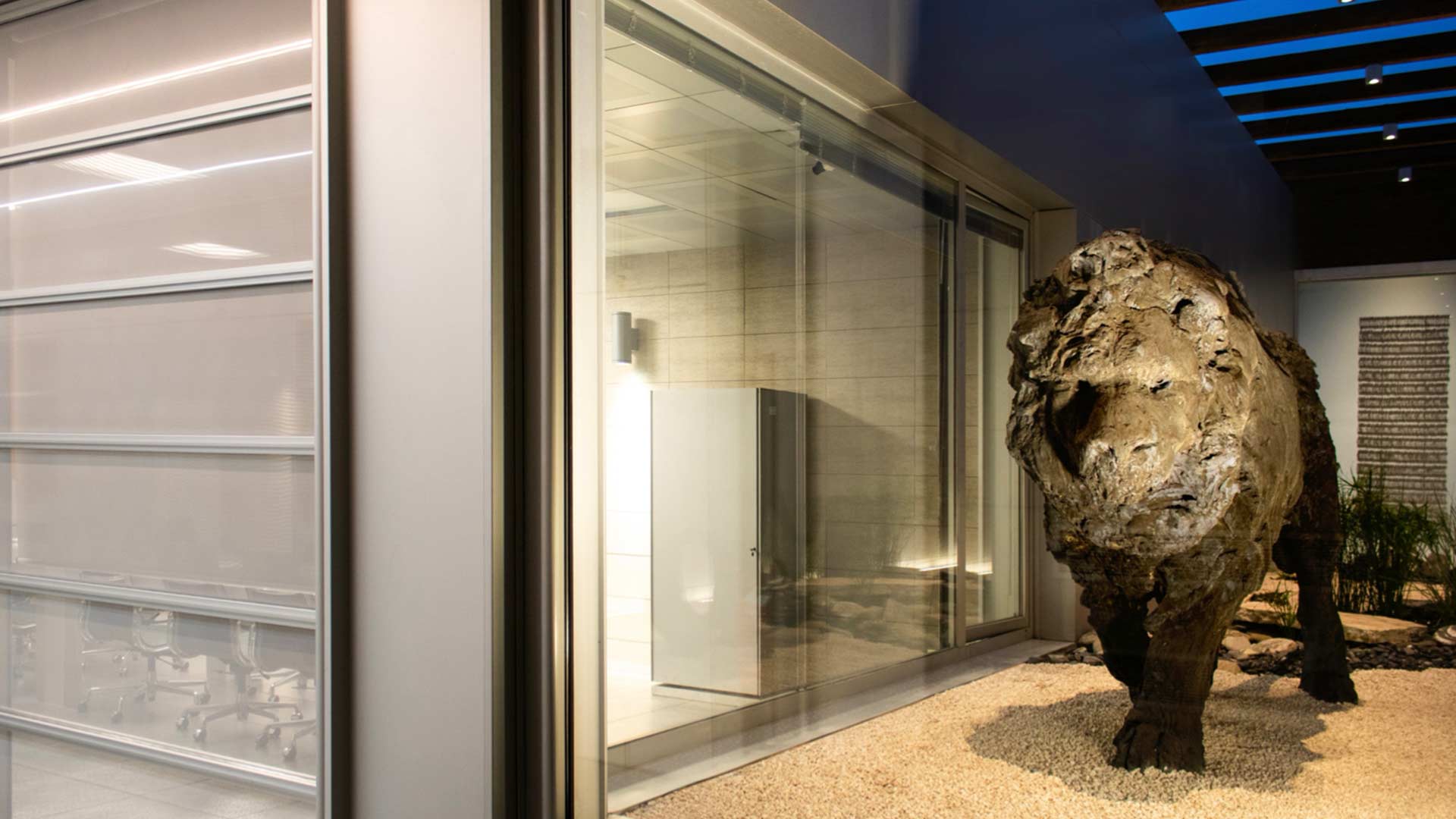
The work of Davide Rivalta instead brings into the space an intense, silent animal presence. The rough, vibrant bronze surfaces retain an almost physical vitality. Even after sunset, carefully calibrated light allows the material to continue to breathe.
With Felice Martinelli, the mark takes on a vertical, archaic, almost ritual strength. In the reliefs and elongated forms, light carves, accompanies, and measures the shadows. Without this relationship, the mark would lose part of its depth.
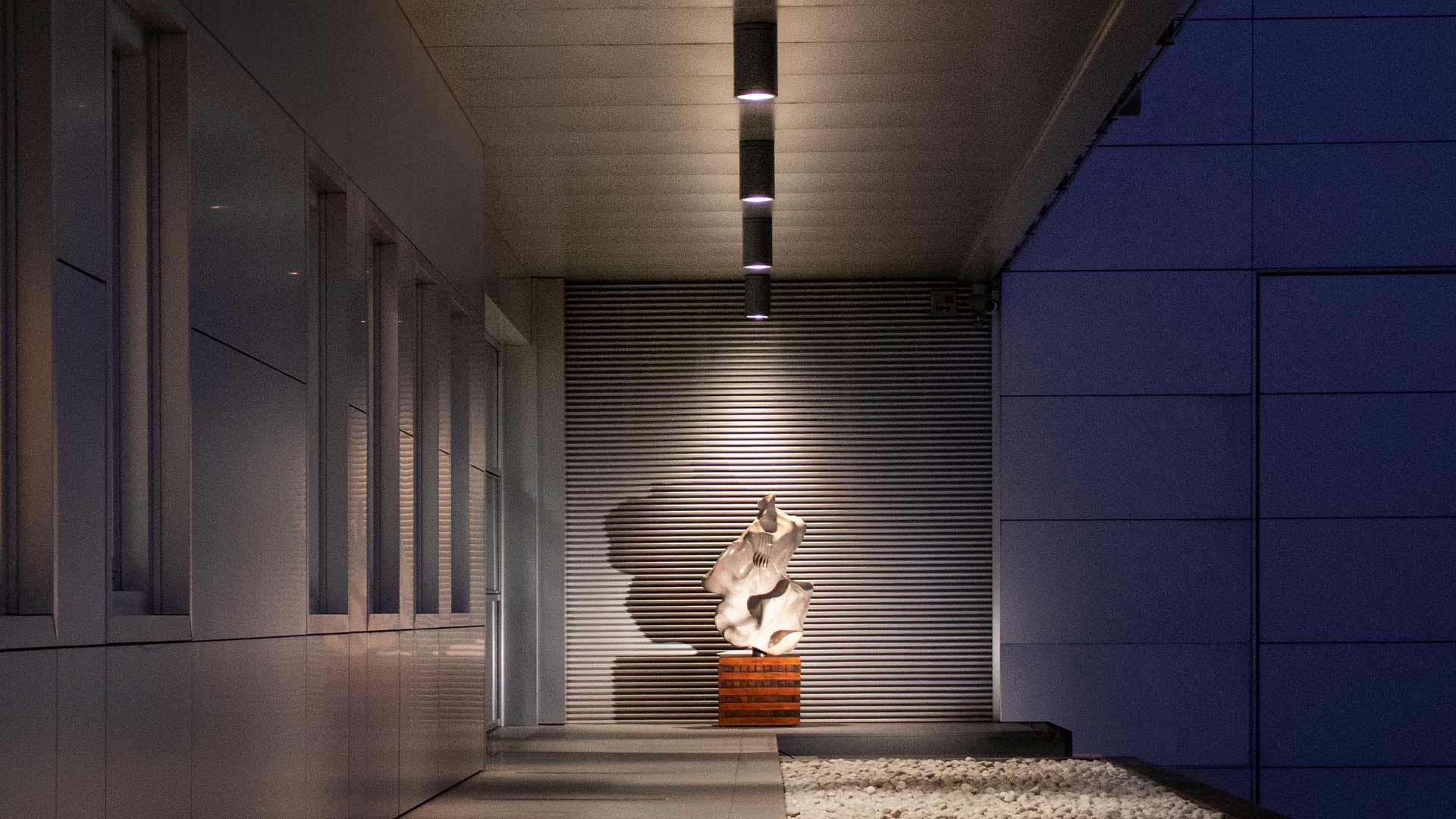
Giampietro Abeni
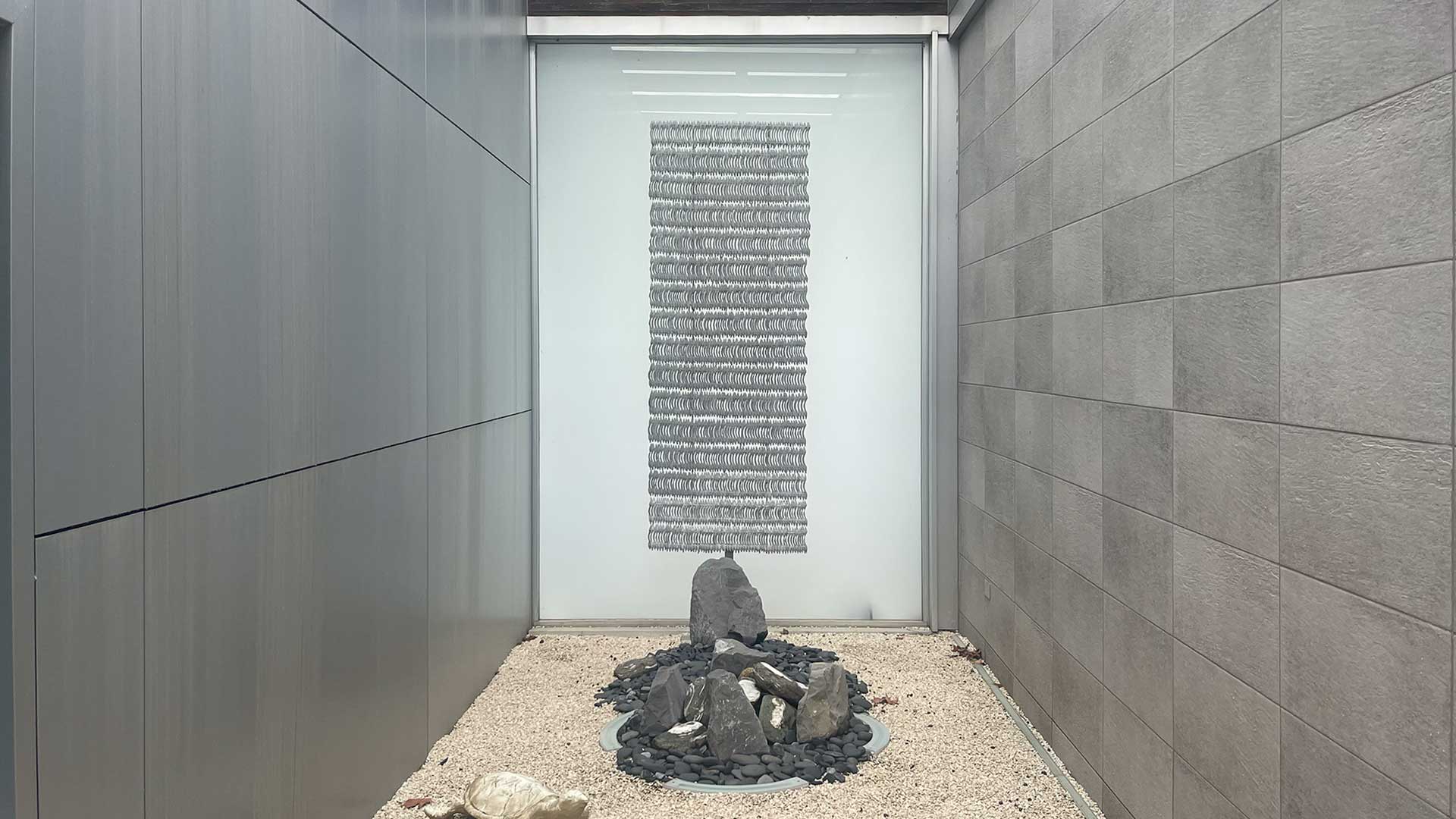
Francesca Ghitti
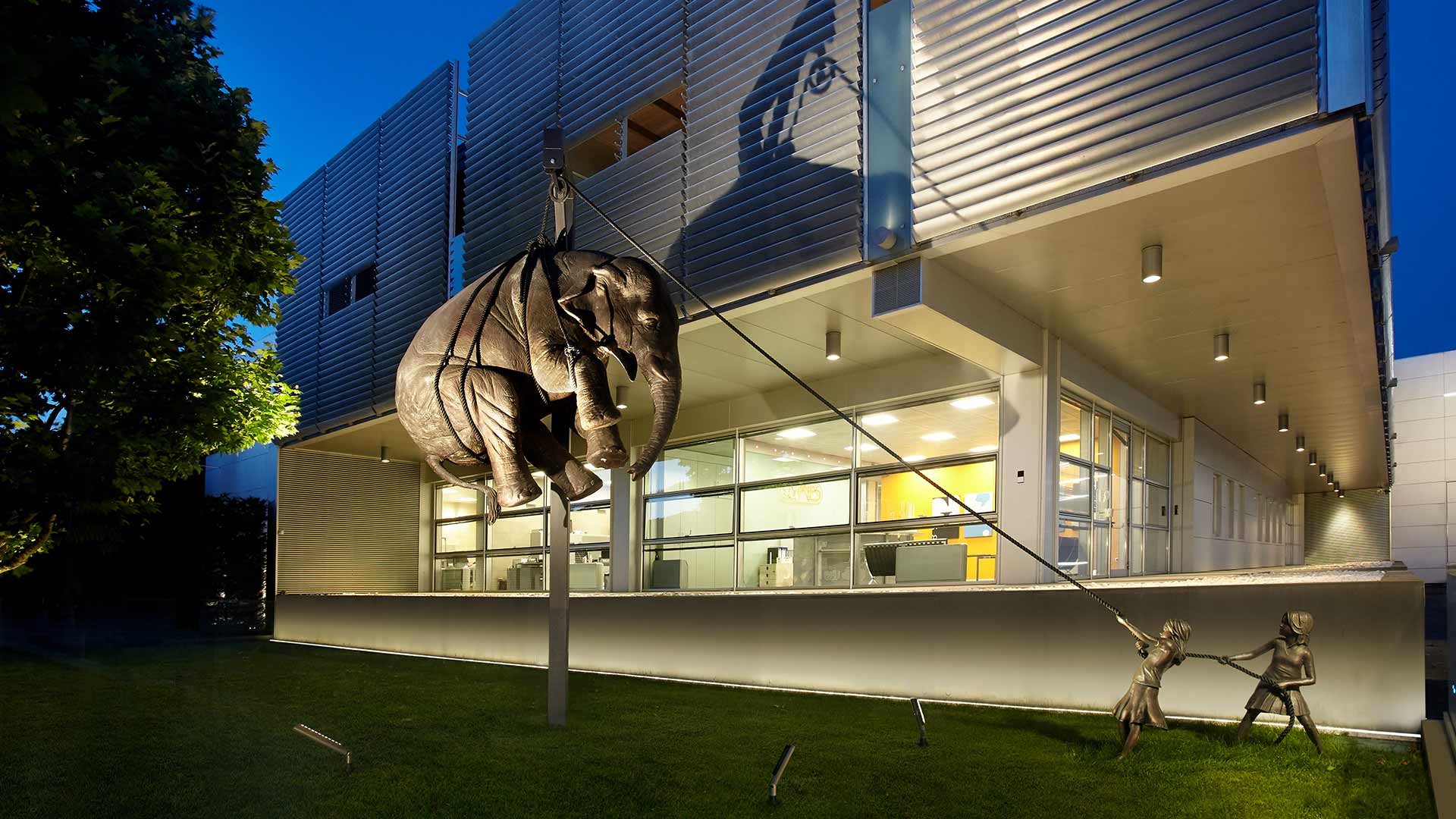
Stefano Bombardieri
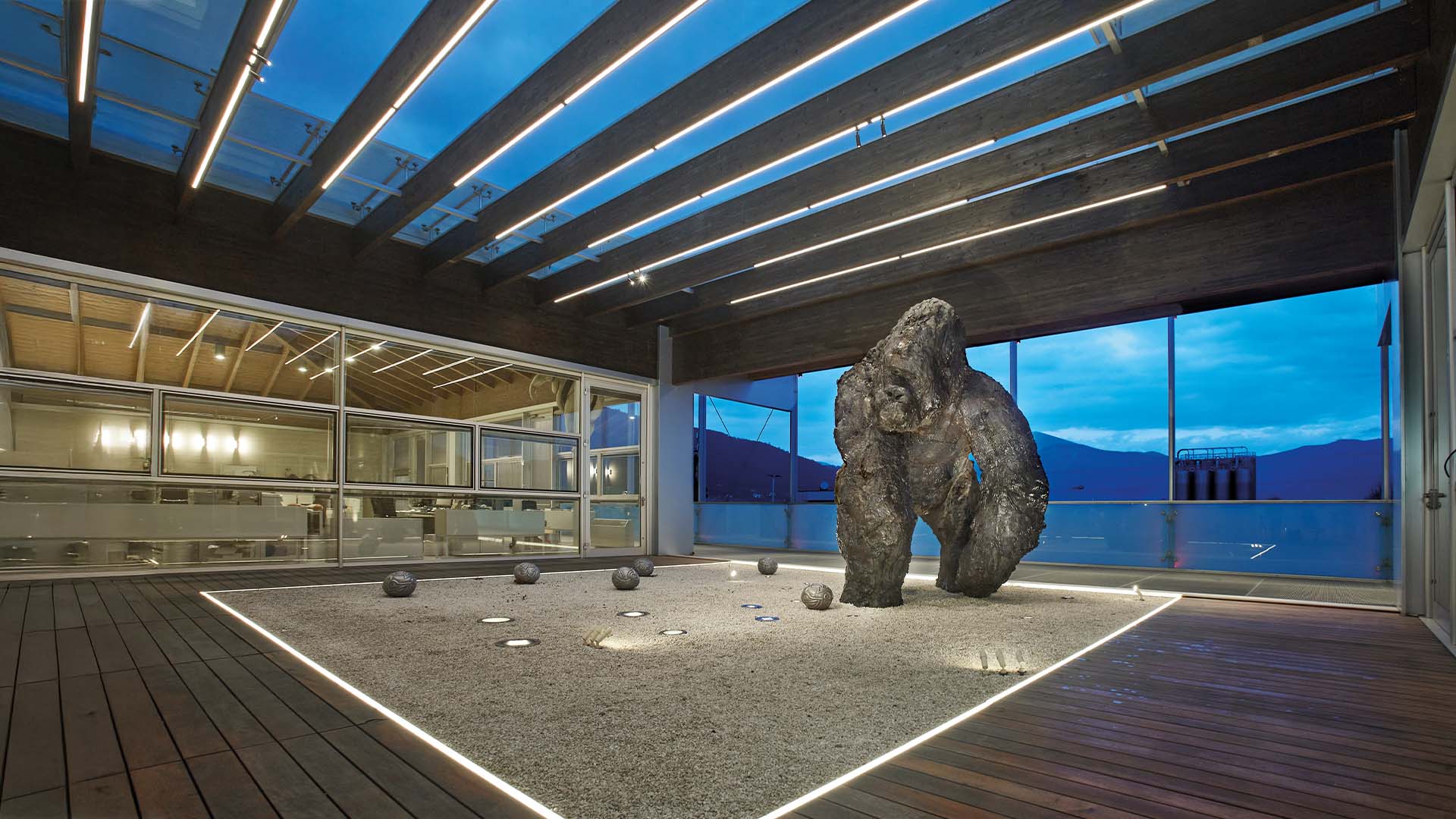
Davide Rivalta
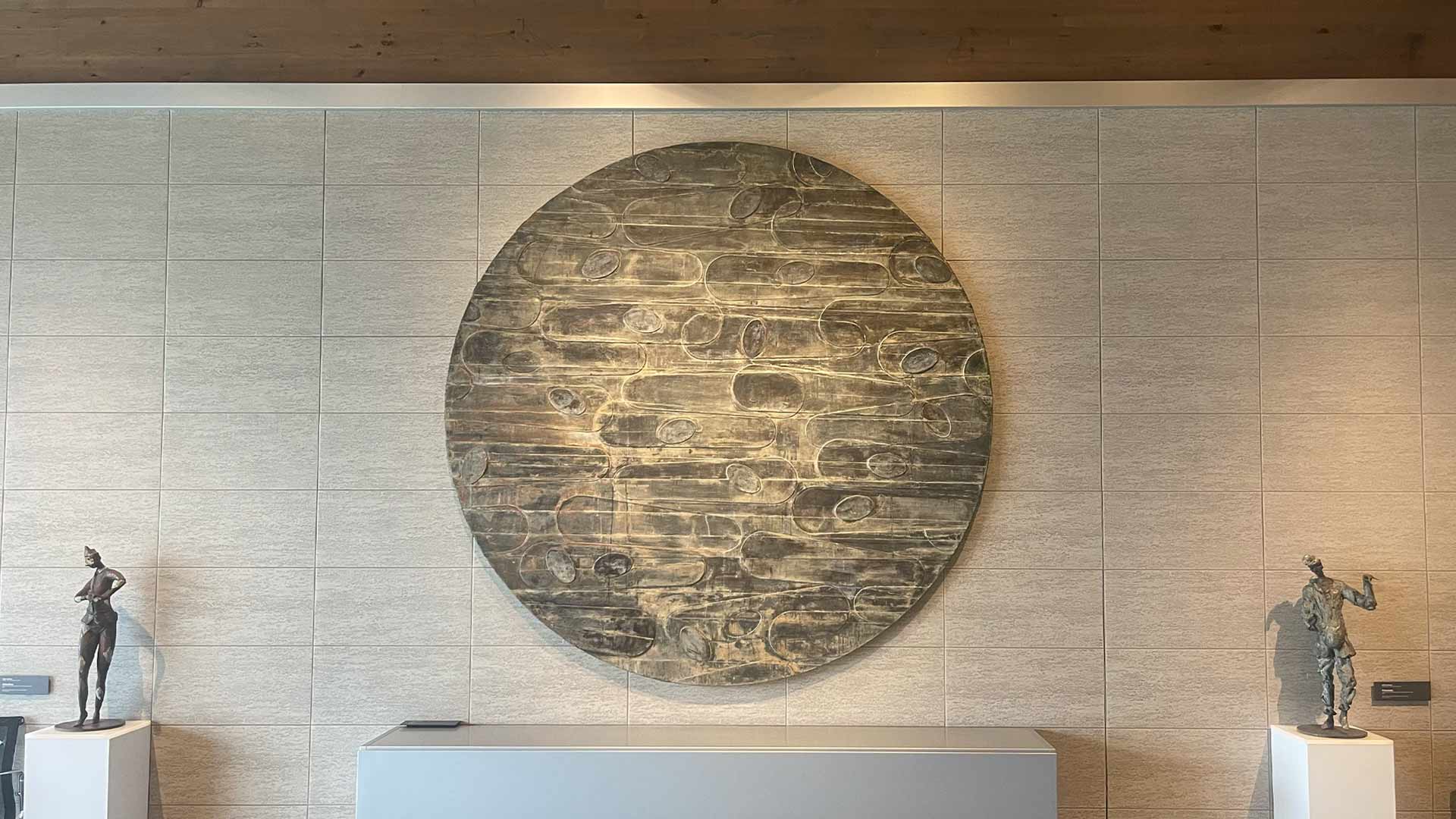
Felice Martinelli
Art beyond the workplace
The dialogue between art, light, and space does not end within corporate environments.
In 2025, on the occasion of the 97th anniversary of the founding of Corte Franca, the project “Vaghe stelle dell’orsa” brought contemporary art into everyday places. The works of Davide Rivalta, Stefano Bombardieri, and Felice Martinelli transformed squares, parks, public gardens, and pedestrian areas into a month-long open-air exhibition route.
Not an exhibition confined within defined boundaries, but an open, walkable experience, close to people.
Art entered everyday routes: in front of a gym, in a square, next to a school, in a park. It changed familiar places, inviting residents and visitors to look at them with new eyes.
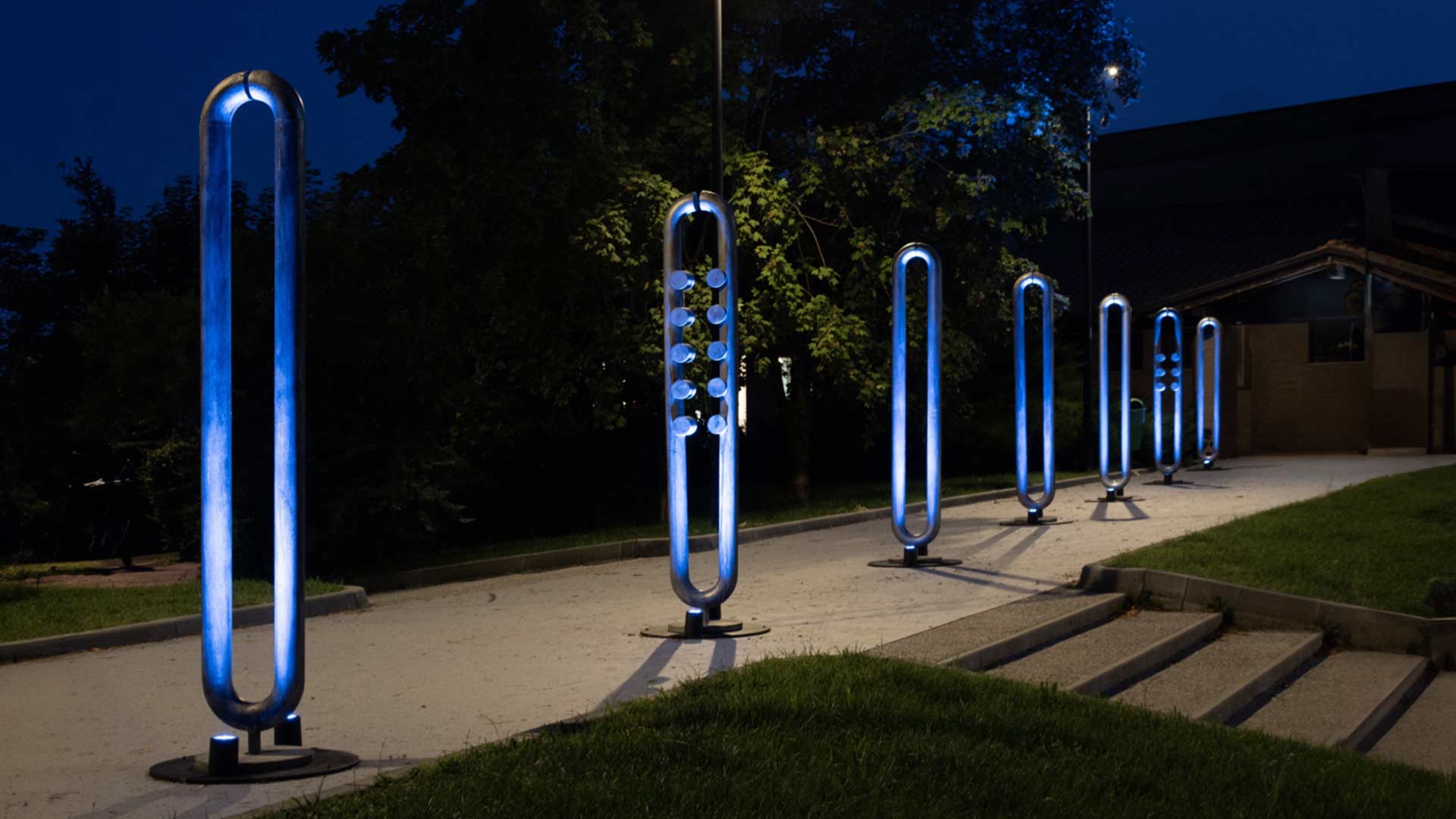
In the pedestrian area in front of the municipal gym, Felice Martinelli’s Apotropaici / Sette Savi stood out as vertical, silent presences. As evening fell, the light traced their outline without disturbing their balance, allowing the shadow to complete their upward tension.
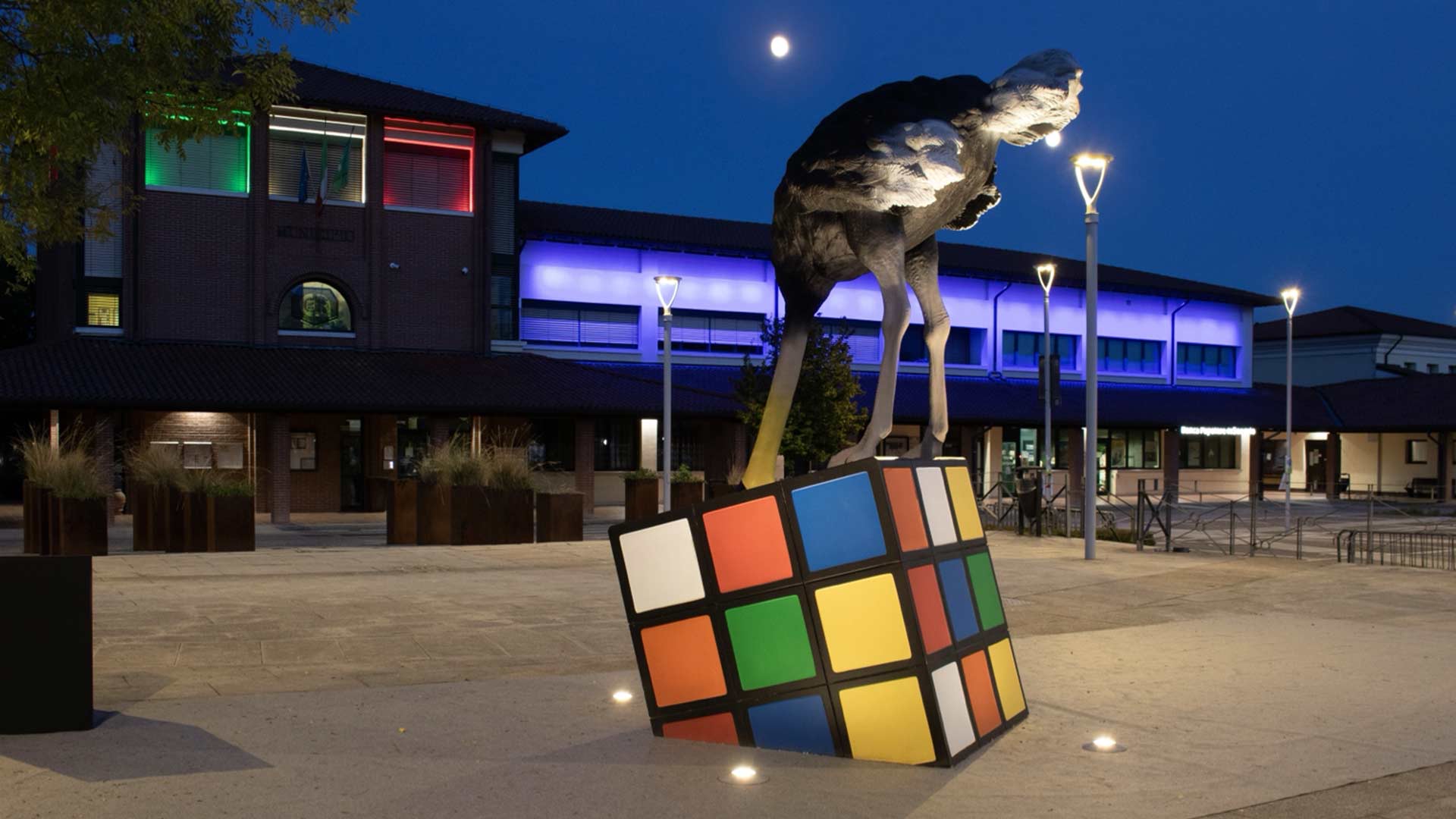
In Franciacorta square, Stefano Bombardieri’s Struzzo Rubik introduced an ironic, disorienting note into the heart of the urban space. The night lighting preserved its chromatic strength, keeping the relationship between colour, volume, and visual surprise alive.
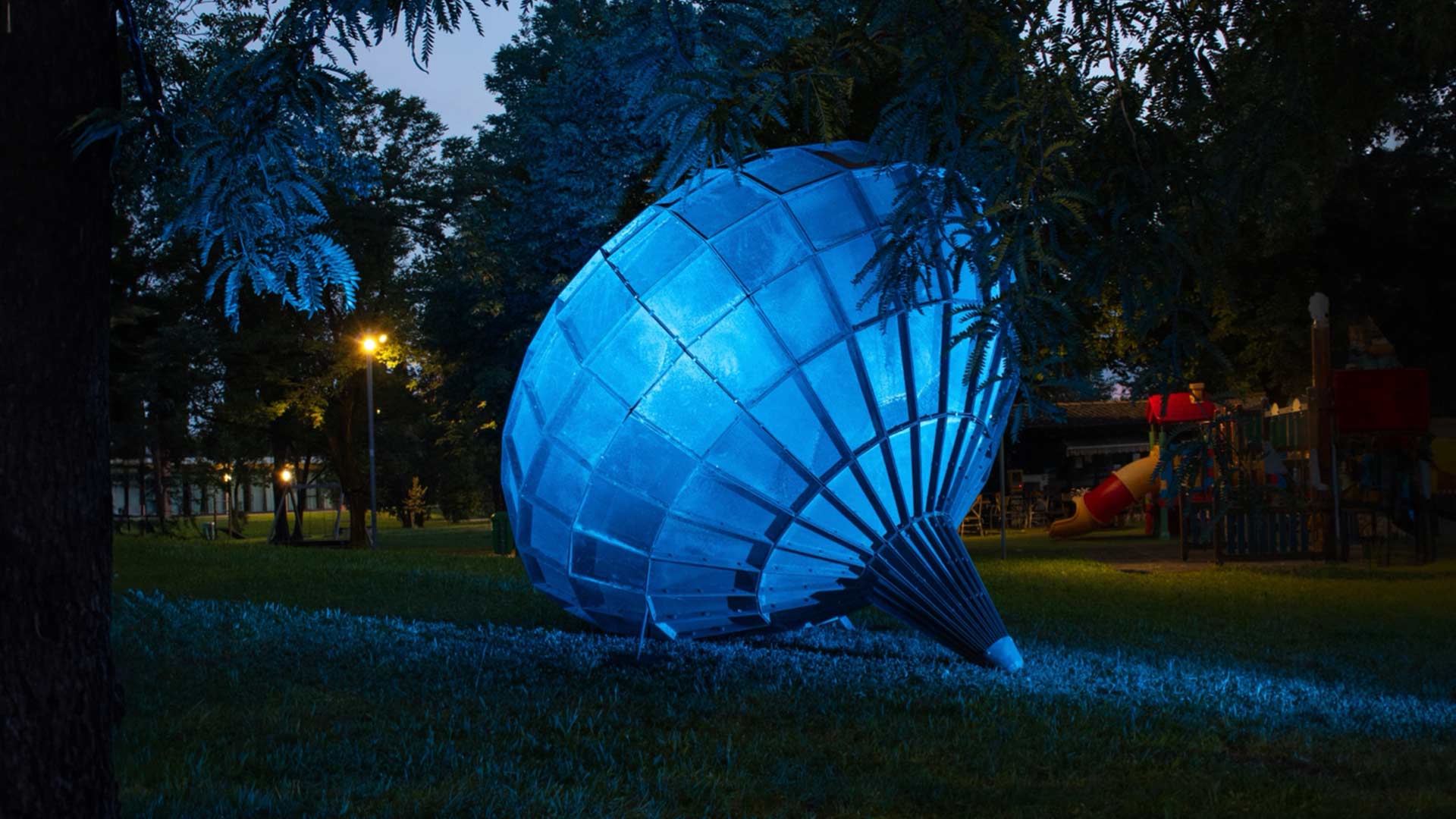
In the Conicchio Park, the Trottola, also by Bombardieri, seemed to hold movement in a single suspended moment of balance. The corten surface, discreetly illuminated, revealed its material nature without losing its natural quality.
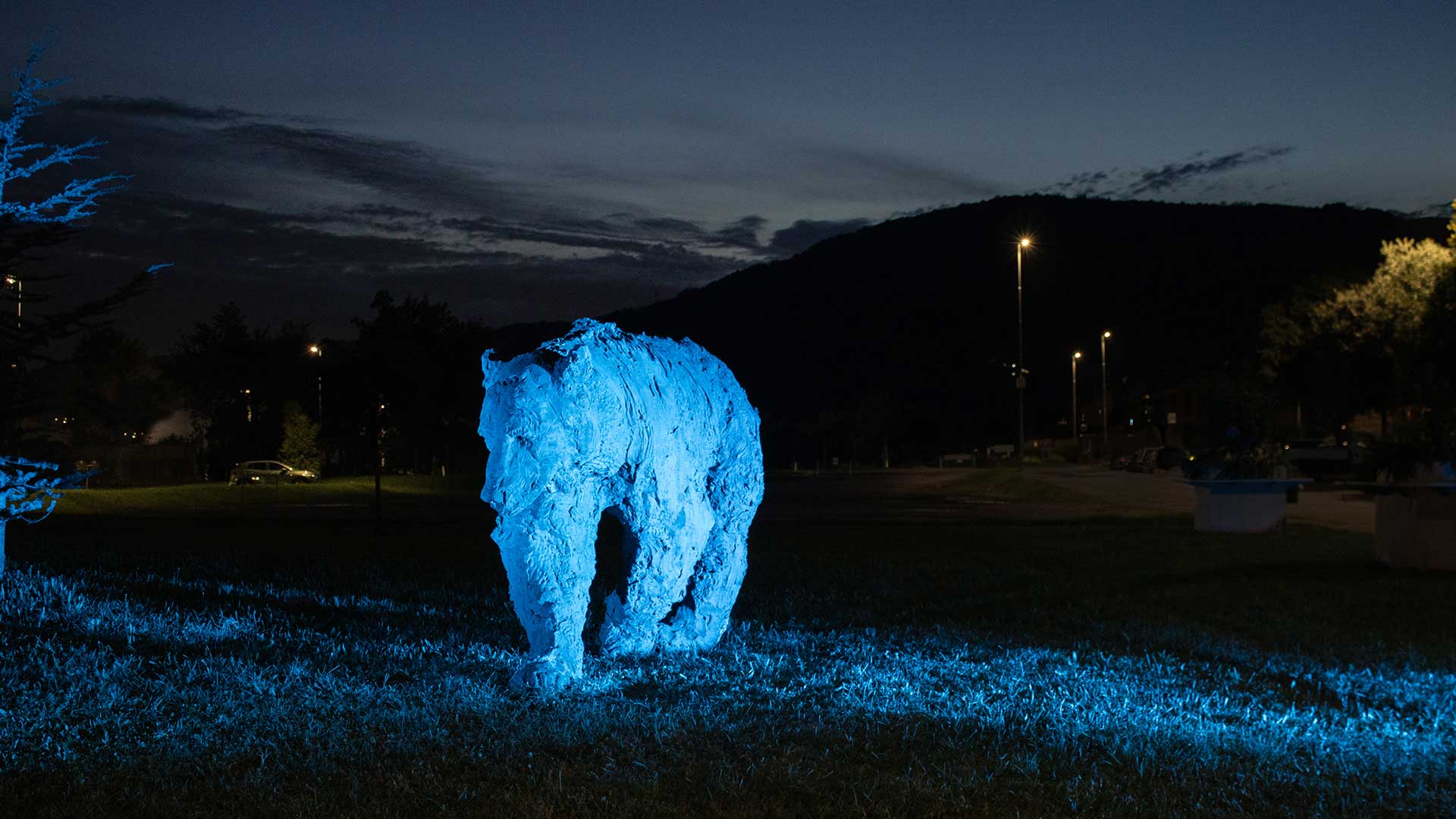
In the garden of the Auditorium, Davide Rivalta’s Orso inhabited the space with a calm, watchful presence. After sunset, the light traced its outline, conveying the silent power of the bronze without overpowering it.
Each work established a different relationship with the place that hosted it. Each lighting intervention extended this relationship beyond daylight hours, transforming the perception of public space even in the evening.
For more information, please fill out the form below and we will get back to you as soon as possible.

