Scientific Director:
Prof. Emilio Faroldi - Deputy Rector Politecnico di Milano
Project Scientific Committee: VIVI.POLIMI.lab
Arch. Matteo Cervini – Vivipolimi – Project contact
Arch. Giuseppe Mondini – Vivipolimi
Arch. Paolo Raffaglio – Vivipolimi
Prof. Franco Infussi – Project contact
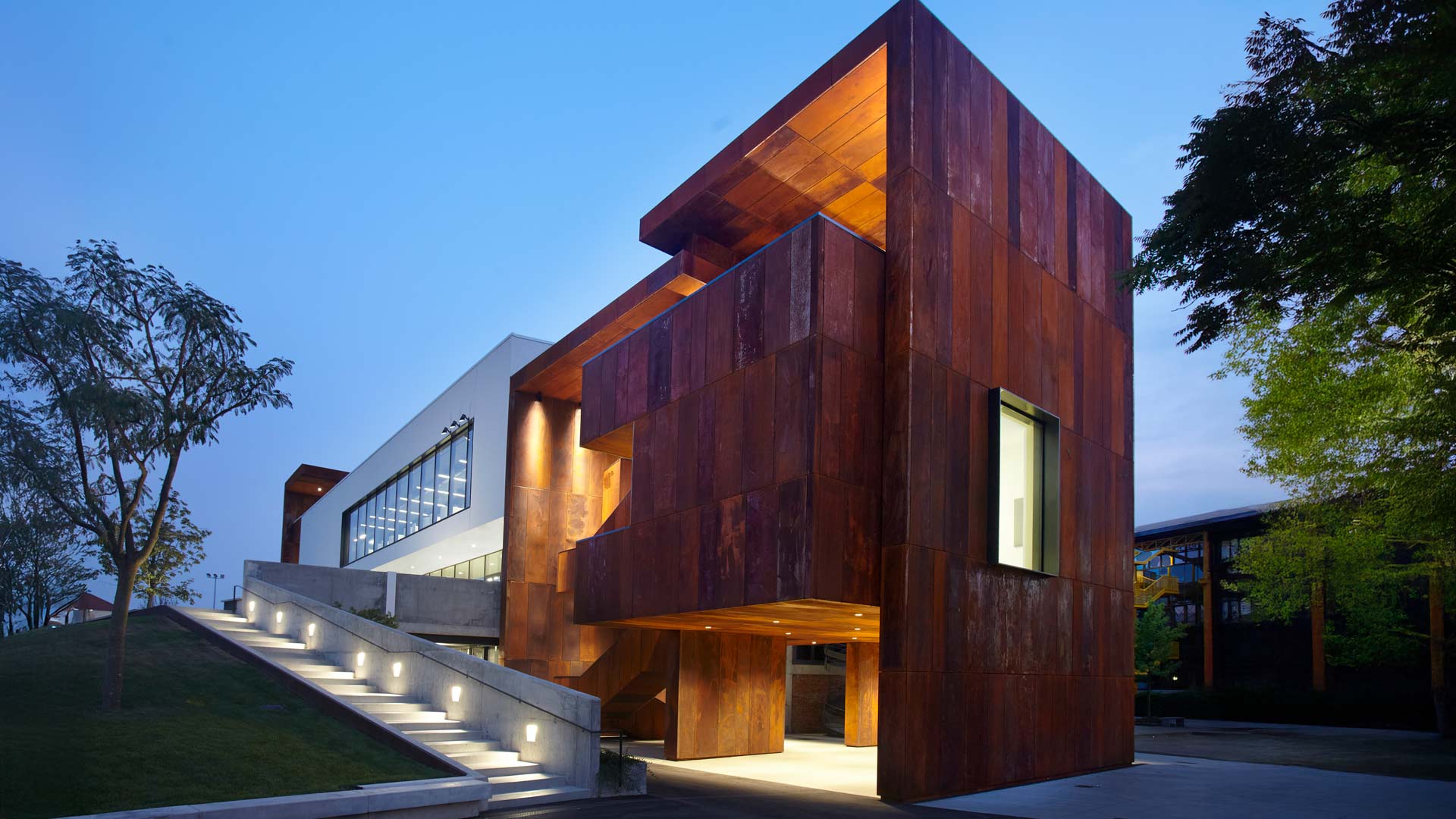
In the heart of Politecnico di Milano’s La Masa Campus, set between the industrial architecture of Bovisa and new spaces dedicated to university life, La Collina degli Studenti was created in 2022 as part of the university’s Vivipolimi programme.
Promoted by the Rector’s Office, the project aims to redevelop the university campuses and improve their liveability. As highlighted in a 2024 interview with designers Matteo Cervini and Giuseppe Mondini, the Collina degli Studenti took shape through a multidisciplinary collaborative network made up of students, professors, architects, technicians, contractors and supplier companies: a team of professionals and researchers who contributed to enhancing a shared collective space.
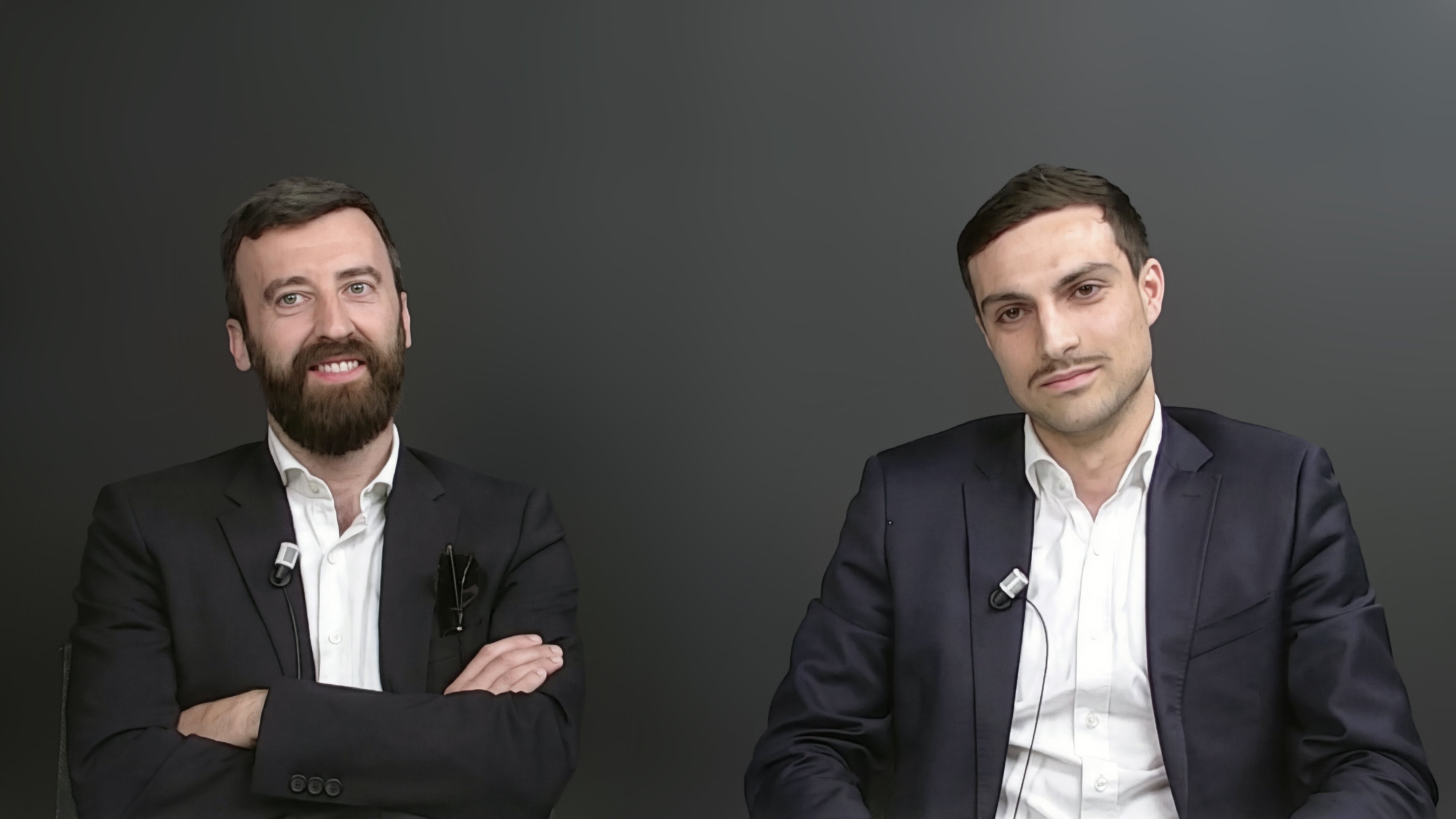
Following the collaboration with Simes, architects Mondini and Cervini share their perspective on the lighting project.
The shared project that rethinks the campus
An urban redevelopment project that starts by rethinking places of education: the Città Studi and La Masa campuses, the latter becoming the focal point of the transformation. Coordinated by the university’s technical and building department, from the creative phase through to completion, the process brings together architectural quality, environmental awareness and a focus on the university experience.
La Collina degli Studenti originated from a survey into students’ needs, carried out through interviews and questionnaires, which revealed specific requirements: indoor and outdoor study stations, green areas and spaces for social interaction. Architect Cervini explains how the La Masa campus lacked a strong identity and how its structural constraints — including the impossibility of intervening directly on the ground due to the presence of a capping layer beneath the road surface — made it necessary to develop the structure vertically. The result is an artificial hill that integrates architecture and landscape, housing study rooms, social spaces, refreshment areas and environments for the academic community, while also increasing green surface area and reducing the urban heat island effect.
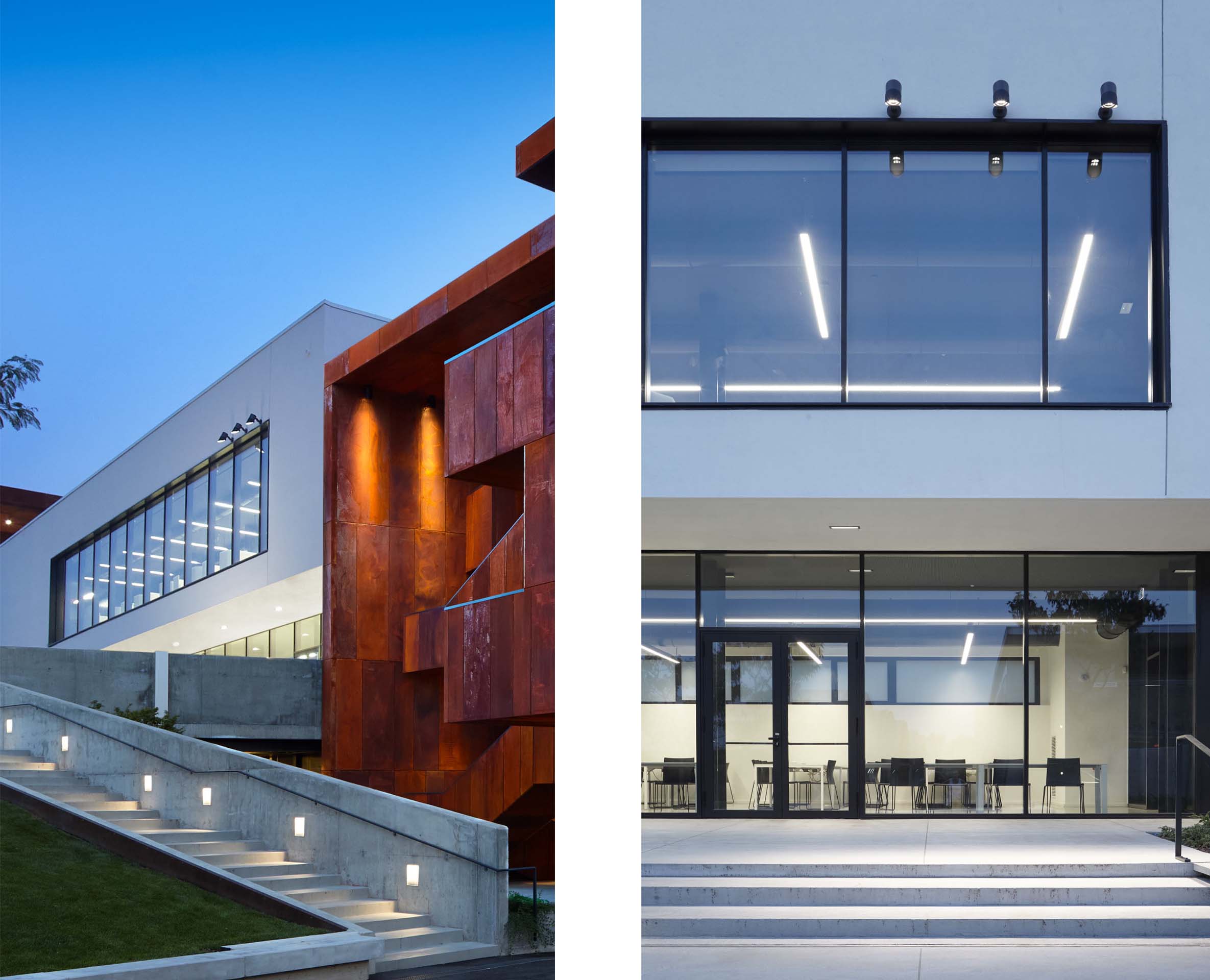
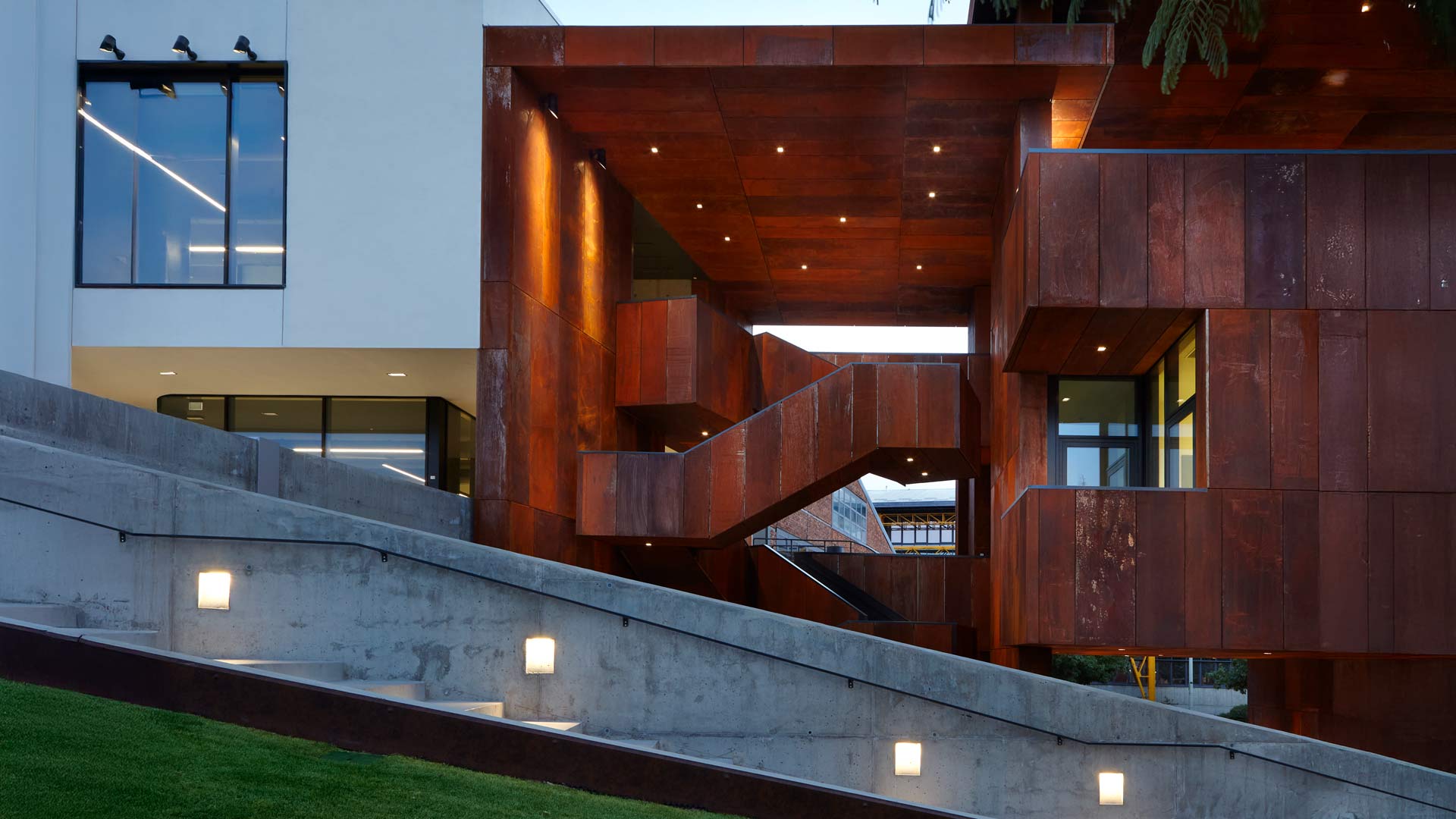
“The idea of raising the ground, creating an elevated embankment, made it possible to generate continuity between the building’s interior and exterior spaces. This new raised level offers not only a more natural physical connection, but also a broader visual outlook.”
Designing for wellbeing
Before the intervention, the area was a transit space: unwelcoming and difficult to use during the summer. Today, the hill’s lawn is used daily by students as a natural extension of the university environment — a place to study, read or simply spend time outdoors.
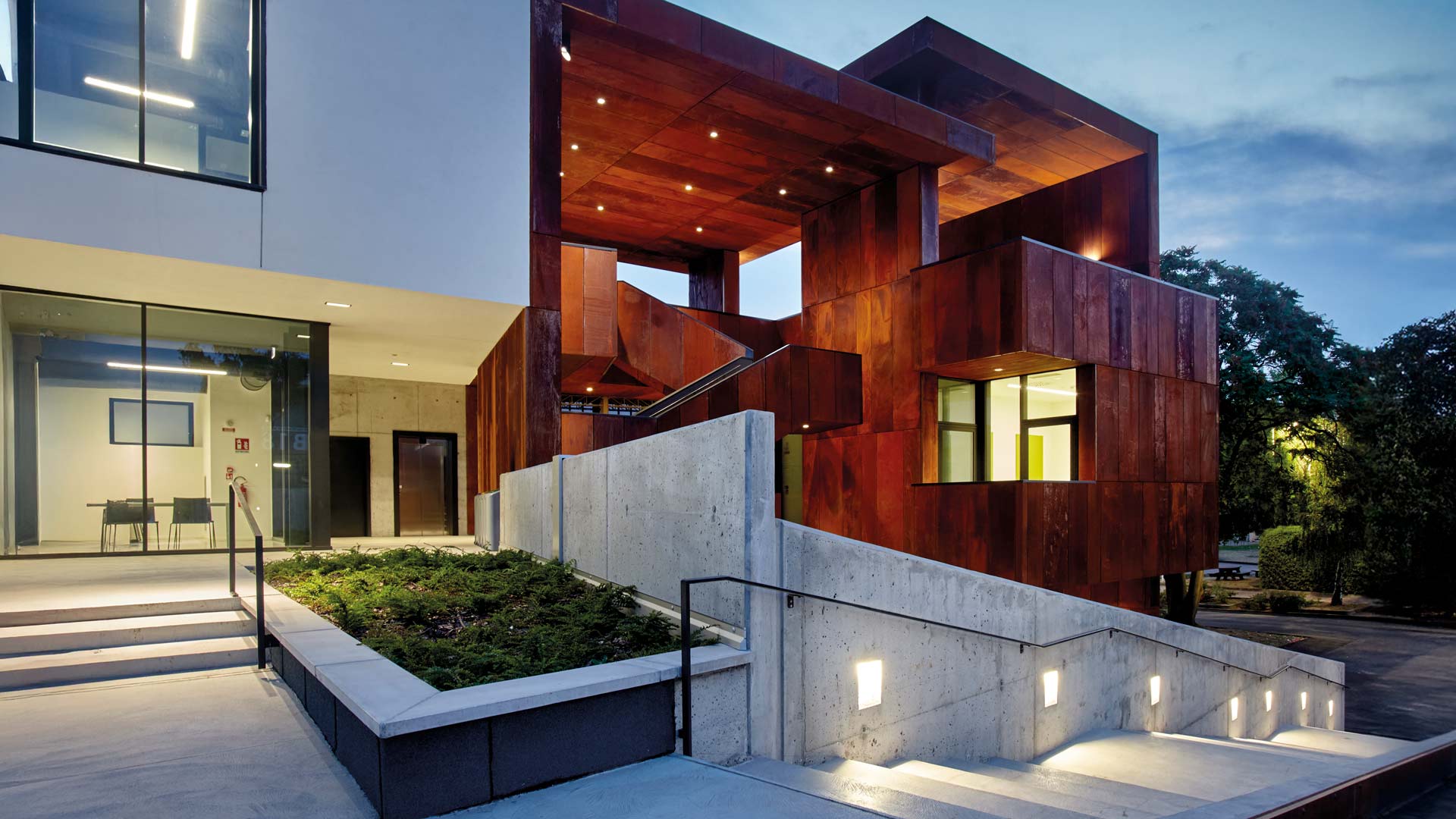
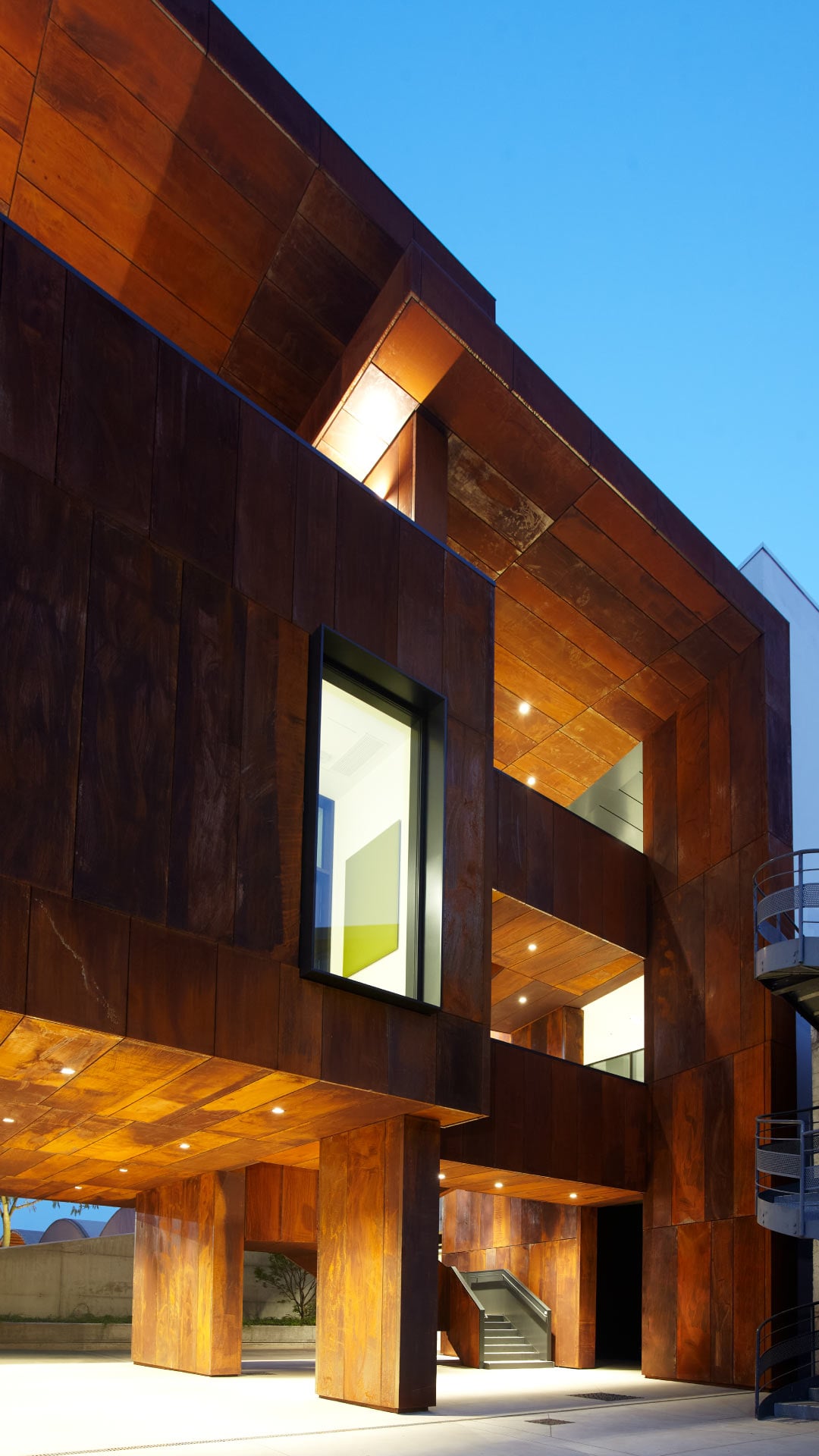
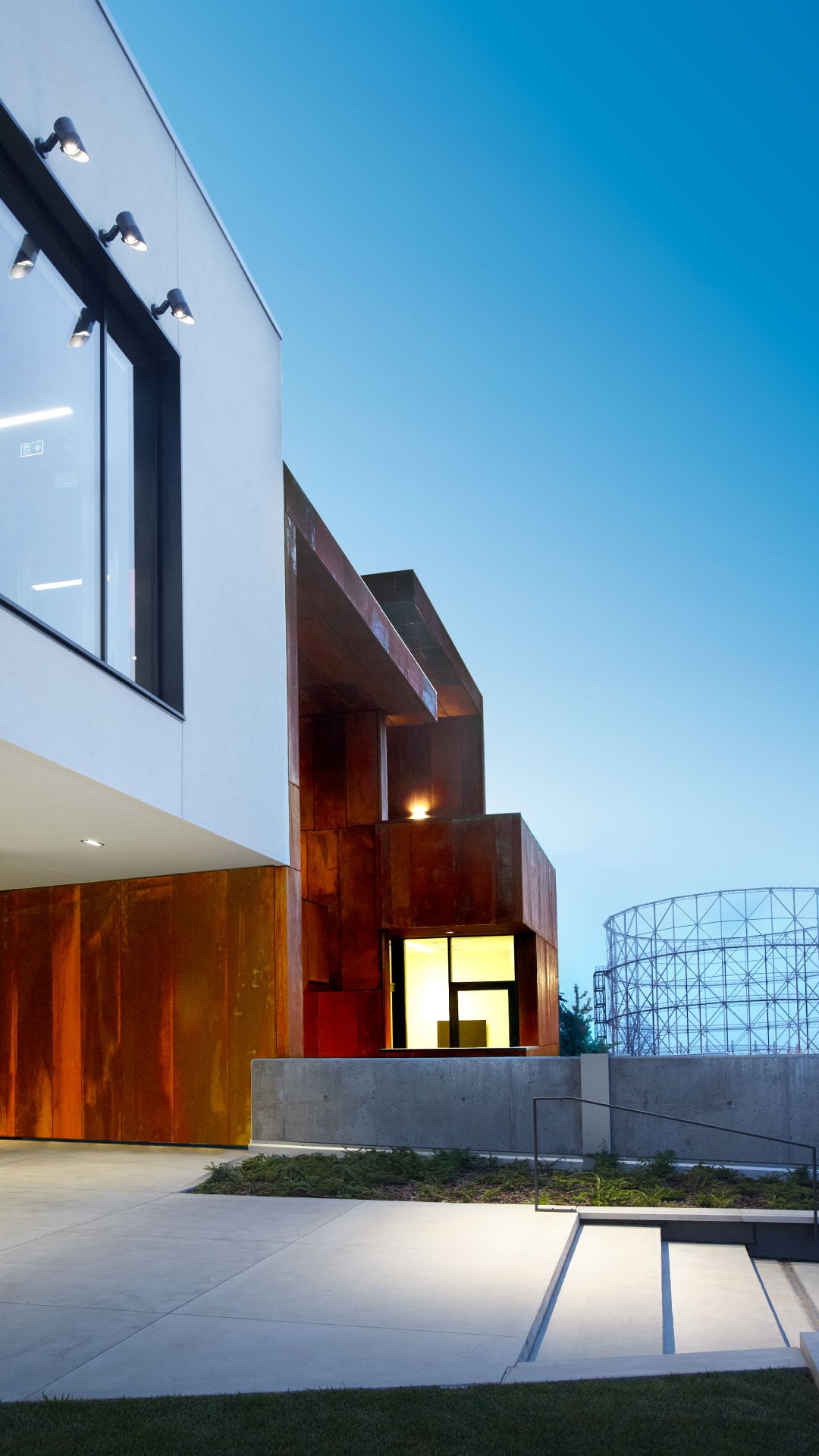
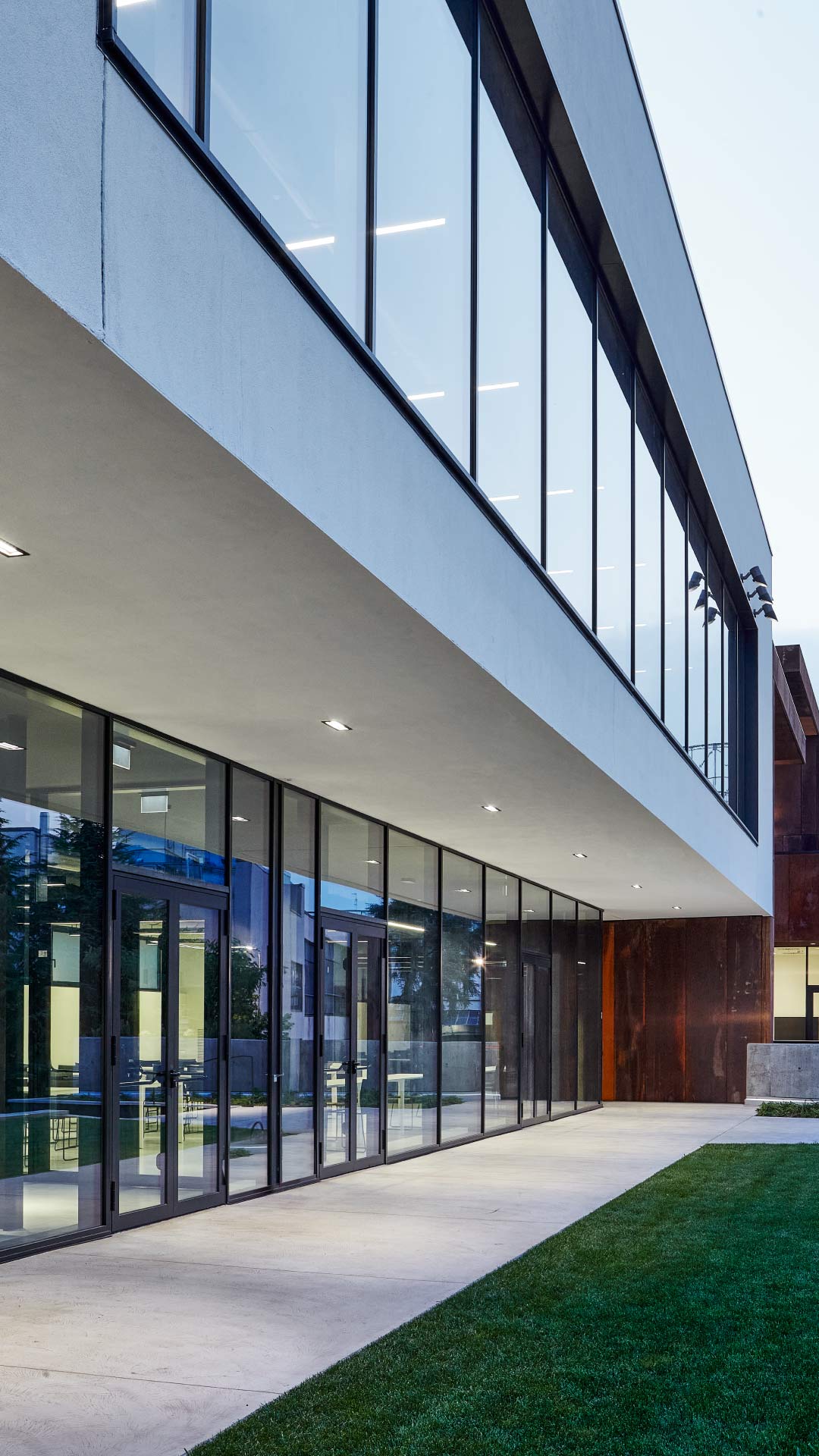
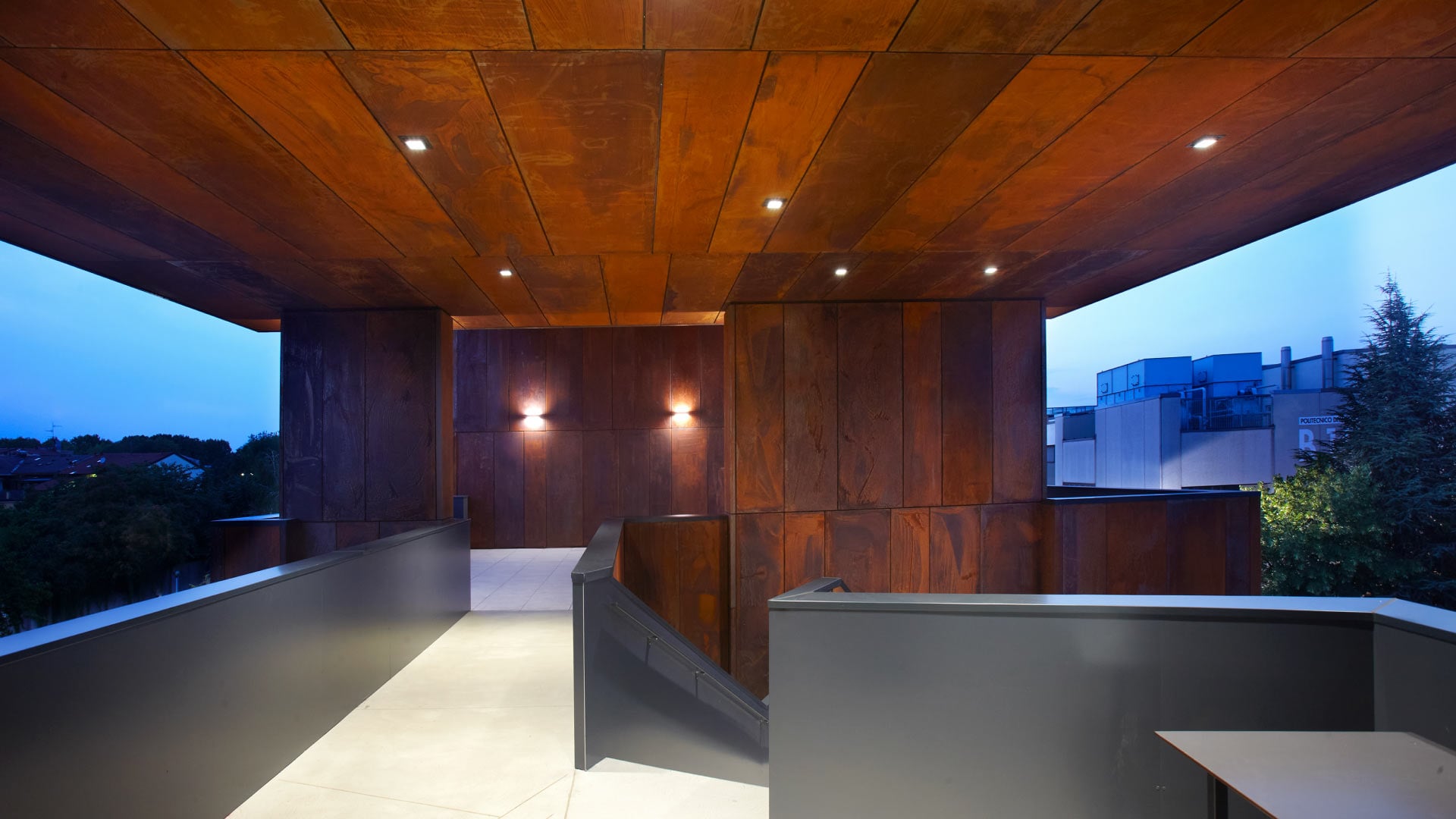
Light is an integral part of this wellbeing-oriented approach. Architect Cervini describes the building as a system of volumes and interlocking elements designed to engage with both natural and artificial light. The choice of materials — Corten steel, concrete and glass — also stems from their ability to react to light and alter the perception of the architecture throughout the day, avoiding a static building and instead creating a dynamic, ever-changing architectural presence.
Integrated light, pathways, and material
Among the most significant Simes elements featured in the project is Ghost, a system that integrates light directly into the architectural material.
The idea behind the intervention was to eliminate, as far as possible, the perception of the lighting fixture itself, leaving only the light and its effect on the surfaces visible.
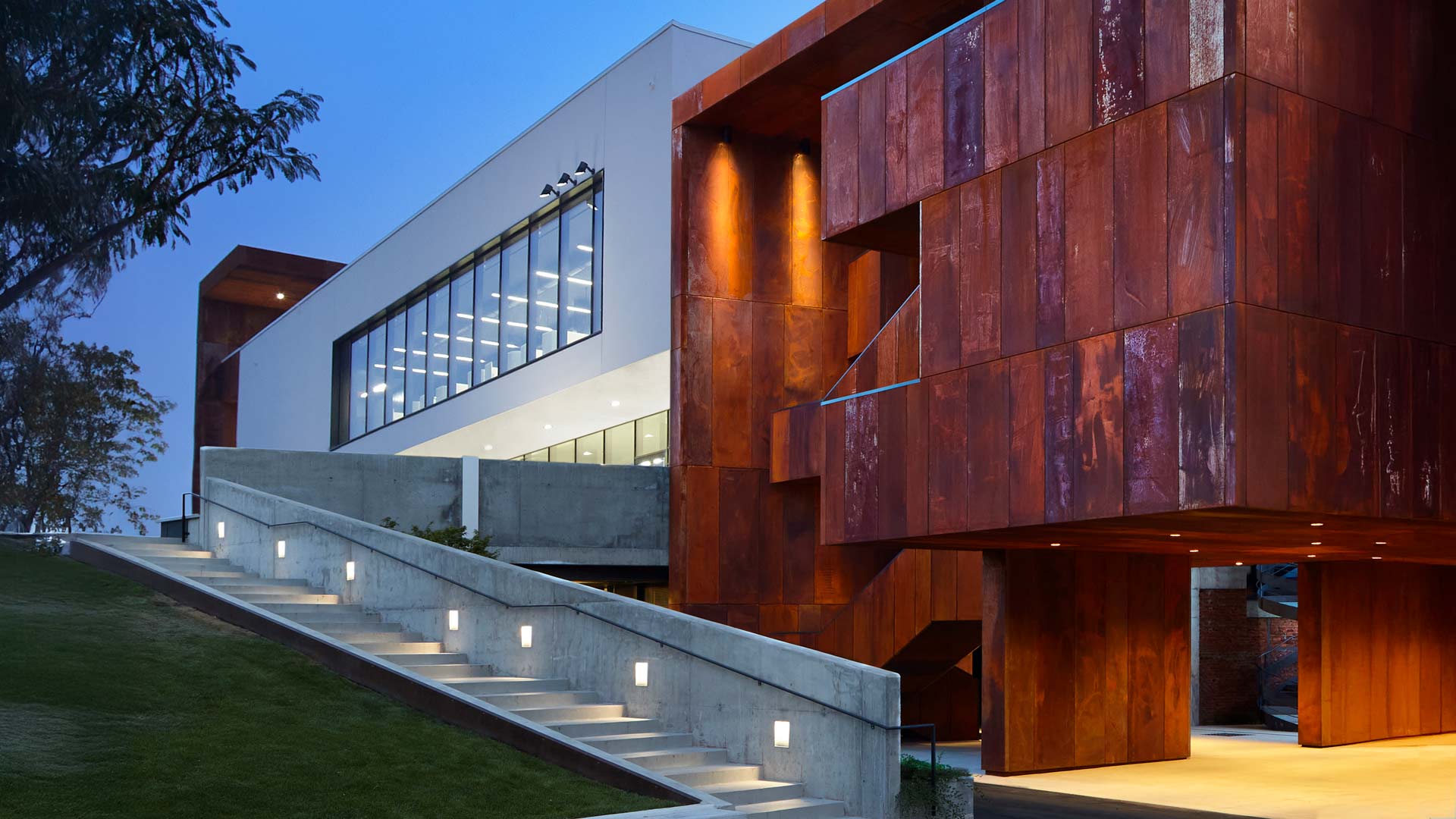
Light defines volumes and pathways, highlighting the materiality of the surfaces and the spatial connection between the different levels of the project. Ghost, conceived as a luminous recess cast directly into the concrete, accompanies the access staircase leading to the green terrace through discreet light cuts, fully integrated into the material. Its presence emphasises the profile of the hill and guides users along a luminous walk towards the top of the green space.
Architect Mondini highlights how invasive or dominant solutions were deliberately avoided, in favour of lighting described by the designers themselves as “almost museum-like”: precise, calibrated, and able to enhance the built elements without altering the atmosphere of the place. This same approach also includes the downlights from the Catch family, recessed into the Corten steel cladding, where they disappear into the architectural envelope while ensuring high performance and minimising glare thanks to their recessed optics. Stage projectors, positioned at specific points on the top of the building, instead provide punctual accent lighting to emphasise the access areas.
As evening falls, La Collina degli Studenti takes on a new identity: pathways, entrances and meeting areas remain clearly legible and welcoming, while the lighting becomes an integral part of the architectural and social experience of the space.
Light as the foundations of architecture
During the interview, Architect Mondini recalls the Simes motto, “light for architecture”, but offers a reflection that overturns its meaning: one could almost claim the opposite, because architecture exists thanks to light and only through light can it find full expression. Without light, in fact, space as we know it would not even exist.
“Light is that element capable of transforming the faces of spaces, of changing scenarios and keeping them in costant evolution”.
A vision that also finds continuity in the thinking of Architect Matteo Cervini. Two perspectives that converge on the same idea: light is not only a technical tool or an aesthetic element, but an essential component of the experience of space and of our relationship with architecture. Even in seemingly static environments, light introduces a changeable and ephemeral dimension, capable of continually altering the perception of spaces and generating ever-new experiences. Its dialogue with time, with surfaces, and with the way it spreads creates scenarios in constant transformation, broadening and redefining the way we inhabit places.
For more information, fill out the form below and we will get back to you as soon as possible.

